
5 Essential Sales Organization Tools to Boost Productivity
Sales productivity in 2026 is driven by tooling, not motivation. High-performing sales teams rely on structured systems that reduce manual work, improve data accuracy, and keep reps focused on selling instead of admin
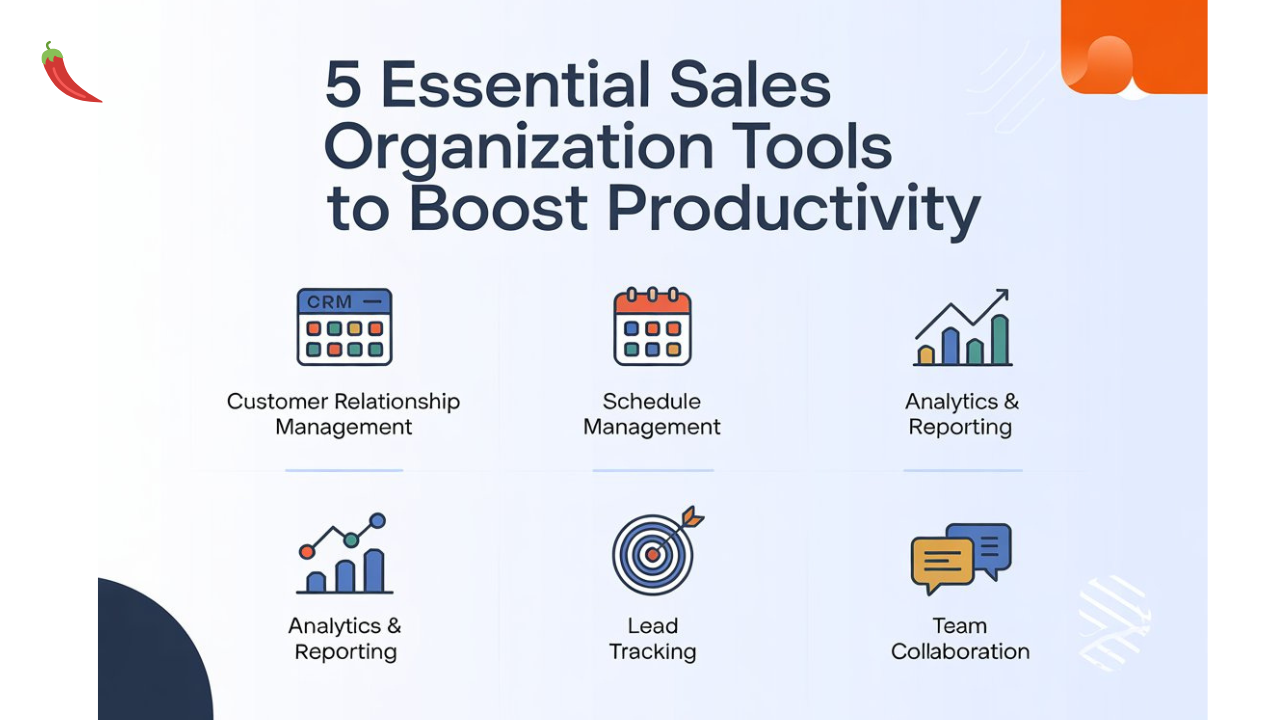
Sales productivity in 2026 is driven by tooling, not motivation. High-performing sales teams rely on structured systems that reduce manual work, improve data accuracy, and keep reps focused on selling instead of admin.
Here are five essential sales organization tools that modern teams use to stay organized, efficient, and competitive.
Salesforce
Salesforce is one of the most widely used CRM platforms for managing sales operations at scale.
Its core strength lies in centralizing customer data and providing full visibility into the sales pipeline. Sales teams use Salesforce to track deals, log communication, forecast revenue, and manage accounts across the entire customer lifecycle.
Key features include contact and account management, pipeline tracking, workflow automation, reporting dashboards, and integrations with hundreds of sales and marketing tools. When configured properly, Salesforce acts as the single source of truth for sales teams.
Outreach.io
Outreach.io is designed to organize and automate sales engagement across email, calls, and tasks.
Sales reps use Outreach to manage sequences, schedule follow-ups, and maintain consistent outreach without relying on memory. It helps teams stay disciplined with follow-ups and ensures no prospect is forgotten.
Core features include multi-step outreach sequences, email templates, task automation, call tracking, and analytics that show which messages and actions perform best. Outreach.io is especially useful for teams running high-volume outbound sales.
Kaspr
Kaspr is a contact data tool focused on extracting verified B2B contact information, particularly from LinkedIn.
Sales teams use Kaspr to quickly find business emails and phone numbers for prospects without manual research. This reduces time spent on list building and accelerates outbound activity.
Key features include LinkedIn contact enrichment, real-time email and phone number discovery, CRM integrations, and simple export workflows. Kaspr is commonly used by SDRs who rely heavily on LinkedIn prospecting.
Cognism
Cognism is a B2B data and sales intelligence platform built for compliant, large-scale prospecting.
It provides access to enriched company and contact data with a strong focus on accuracy and regulatory compliance. Sales teams use Cognism to build targeted lead lists and prioritize accounts that match their ideal customer profile.
Notable features include firmographic and technographic data, intent signals, compliance-focused data sourcing, advanced filtering, and CRM synchronization. Cognism is often used by mid-market and enterprise sales teams.
Leadspice
Leadspice is built to help sales teams access verified business leads with better relevance and less noise.
It focuses on delivering leads that match specific targeting criteria while reducing the time spent cleaning and qualifying data. Sales teams use Leadspice to improve outreach efficiency and focus on prospects that are more likely to respond.
Key features include verified lead data, targeting filters, enrichment capabilities, and support for sales-led lead generation workflows. Leadspice fits well for teams that value lead quality over raw volume.
Conclusion
Sales organization in 2026 is about choosing the right tools for each stage of the sales process. CRMs manage relationships, outreach tools enforce consistency, and data platforms fuel prospecting with accurate information. When these tools work together, sales teams spend less time managing systems and more time closing deals. The real question is not which tool is best, but whether your current stack is helping your team sell or slowing them down.